
Why personalized product recommendations matter
Most product pages show every shopper the same row. Personalized recommendations react to what each shopper is looking at right now, and they're now in every plan of the Depict app on Shopify. Why it matters, how we built it, and why it's a milestone for us.
By Lassi Eronen
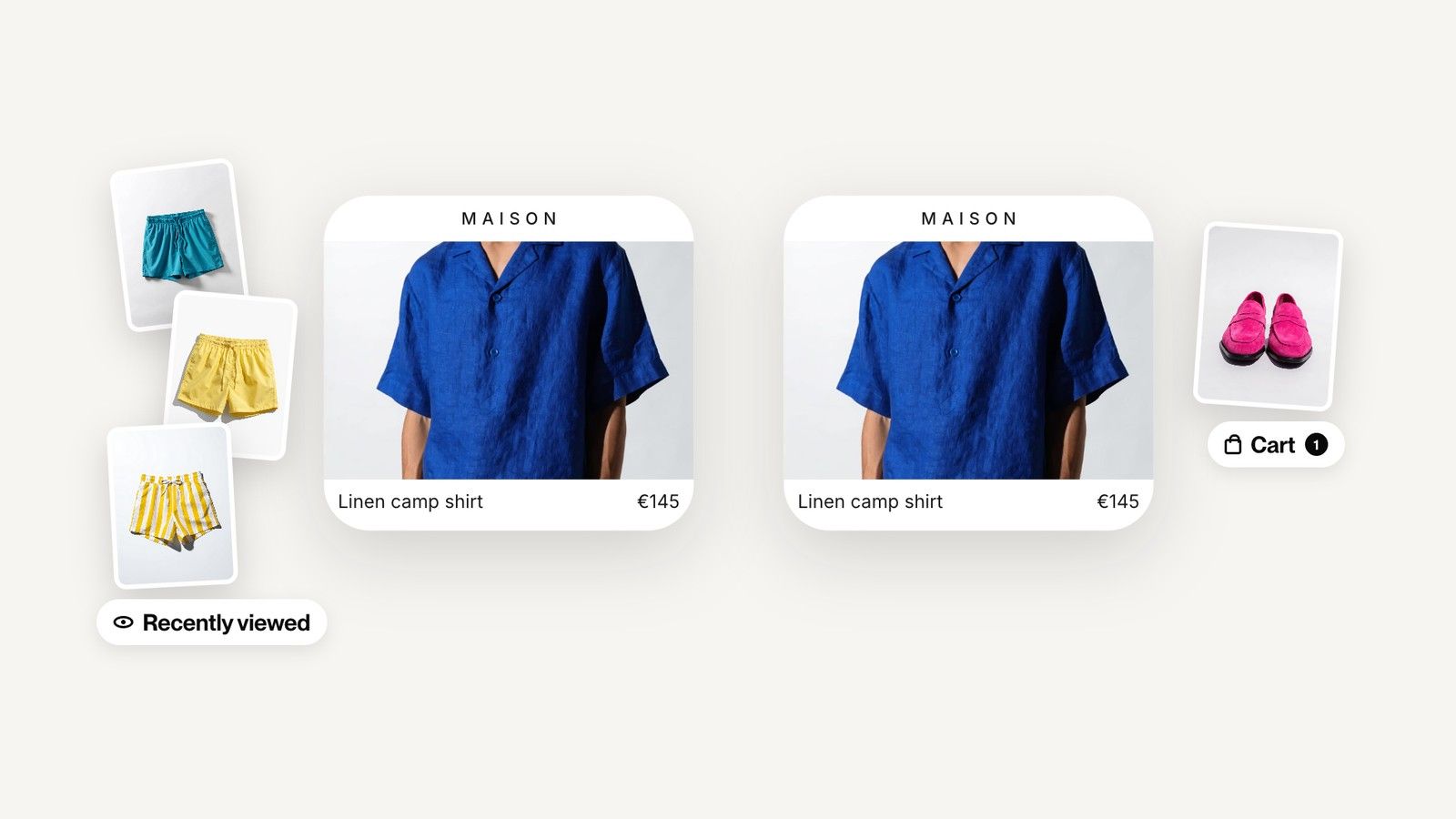
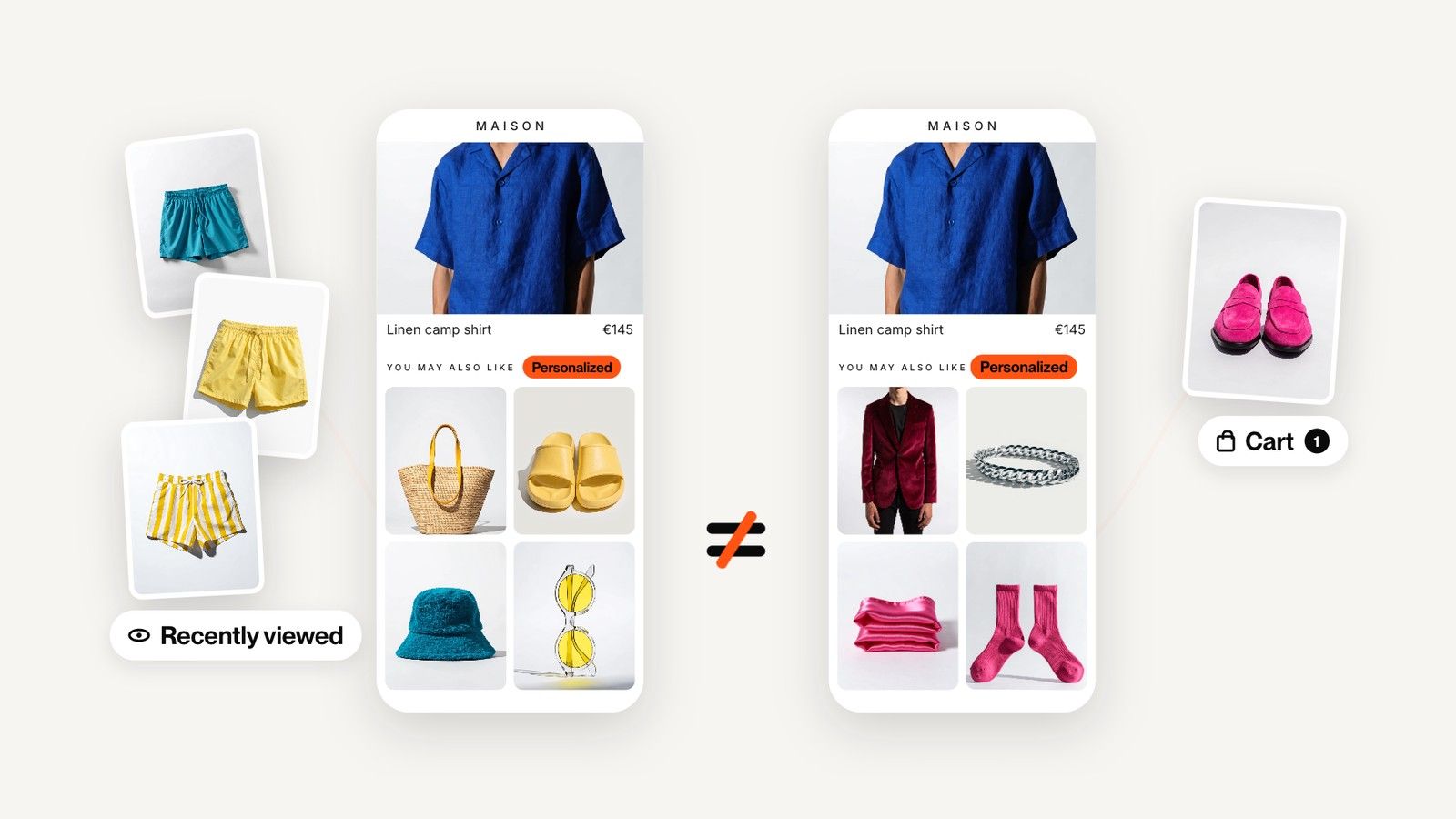
Two shoppers open the same blue linen shirt on your store. One has spent the morning looking at swim shorts. The other already has a pair of pink loafers in the cart. On most product pages, both of them get exactly the same "You may also like" row.
That row was picked for an average shopper who doesn't exist. Personalized recommendations fix that, and they're now part of Depict. Here's why they matter, how we think about them, and why this one is a big step for us.
Personalization, in plain words
A personalized recommendation reacts to the person looking at it. Instead of showing every visitor the same products under that shirt, the row is worked out the moment the page loads, from what this shopper has just looked at and what's already in their cart.
So the shopper planning a beach holiday sees a raffia tote, pool slides and a pair of sunglasses. The one getting ready for Saturday night sees a velvet blazer and a pink pocket square. Same page, same shirt, two different rows, and both of them make sense.
Why it matters
The best clue to what someone wants is what they're doing right now. Not a profile built months ago, but the products they keep opening and the thing they've already decided to buy. A good shop assistant reads those signals without thinking about it. Most product pages ignore them.
Shoppers notice. In McKinsey's research on personalization, 71 percent of consumers said they expect companies to personalize their interactions, and 76 percent said they get frustrated when that doesn't happen.
When the page reads the visit too, a few things change.
- The next product is easier to find. The row answers the question the shopper is already asking, so putting an outfit together takes less scrolling and searching.
- The cart gets completed, not just filled. A row built from what's in the cart suggests what goes with it, which is where cross-sell feels like help rather than a pitch.
- Different shoppers see different products. Instead of the same four bestsellers on repeat, each row draws on the part of your range that fits the person in front of it.
- People pick up where they left off. A recently viewed row brings back the product someone was weighing up before they wandered off.
None of this asks the shopper to log in or fill in a profile. It comes from the visit itself. And a first-time visitor with no history yet still gets a full row, from the steps that don't need one.
Does it take the store out of your hands?
It's a fair worry. A lot of personalization works like a black box. You switch it on, and an algorithm decides what your shop window looks like.
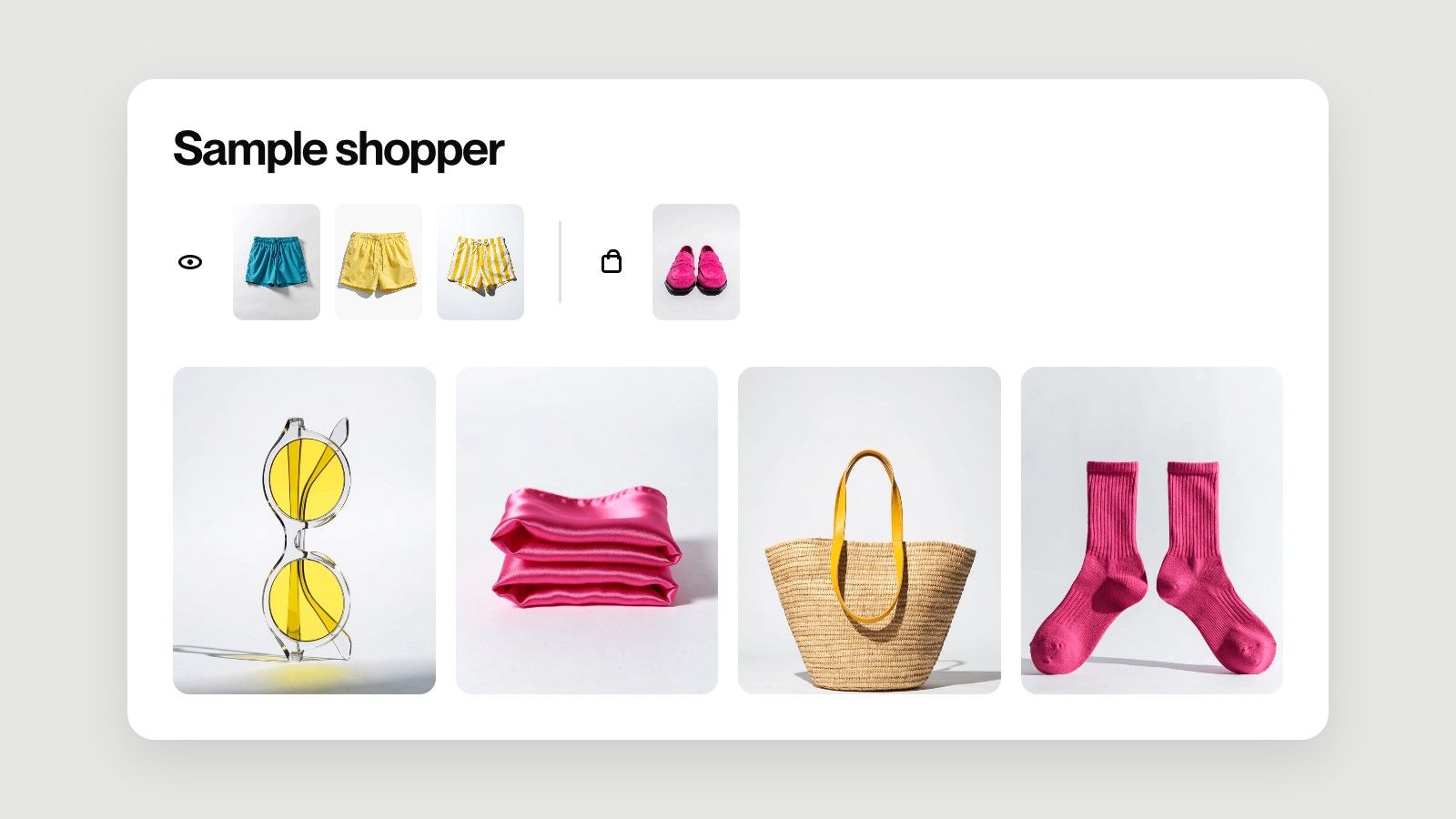
We didn't want that, and the merchants we work with don't either. In Depict, personalization arrives as a few more ingredients in the recipe you already use. You build each row from steps that read like sentences, such as similar to what they viewed, goes with what's in their cart, or what they looked at last. You choose how much each signal counts. Your rules still hold, so sold-out products stay out and pinned products stay where you put them. And before you save, you can preview the row as a sample shopper with their own cart and viewing history, and see what a visitor like that would get.
That's the idea behind everything we build. You curate the moments that matter, and Depict does the work of applying them to every shopper, on every visit.
A milestone for us
Until now, every shopper looking at a product in a Depict store on Shopify saw the same recommendations. Our recommendations team, led by Karl Gylleus, spent the summer rebuilding the engine and the editor around it to change that. Since October 27, personalized recommendations are live for every store on Depict: Search & Merchandising, the Depict app for Shopify, in every plan.
That last part matters to us. Personalization has often been sold as an upgrade, whether that's a higher plan, an enterprise contract or a project for a developer to wire up. We think it belongs in the everyday toolkit of every brand that cares about how its store feels, so that's how we've shipped it.
See it in one minute
Our one-minute film walks through the whole idea, from the two shoppers to the editor. If you already use Depict recommendations, open the recommendations editor in the app and add a Recently viewed step, or base a row on what the shopper viewed or has in their cart. The product update has the details.