
Our search matched years of hand-tuned Algolia in ten weeks
For ten weeks we benchmarked Depict's hybrid search against a hand-tuned Algolia on a live fashion store. Here is how the gap closed, with nobody touching the store's settings.
Di Lassi Eronen
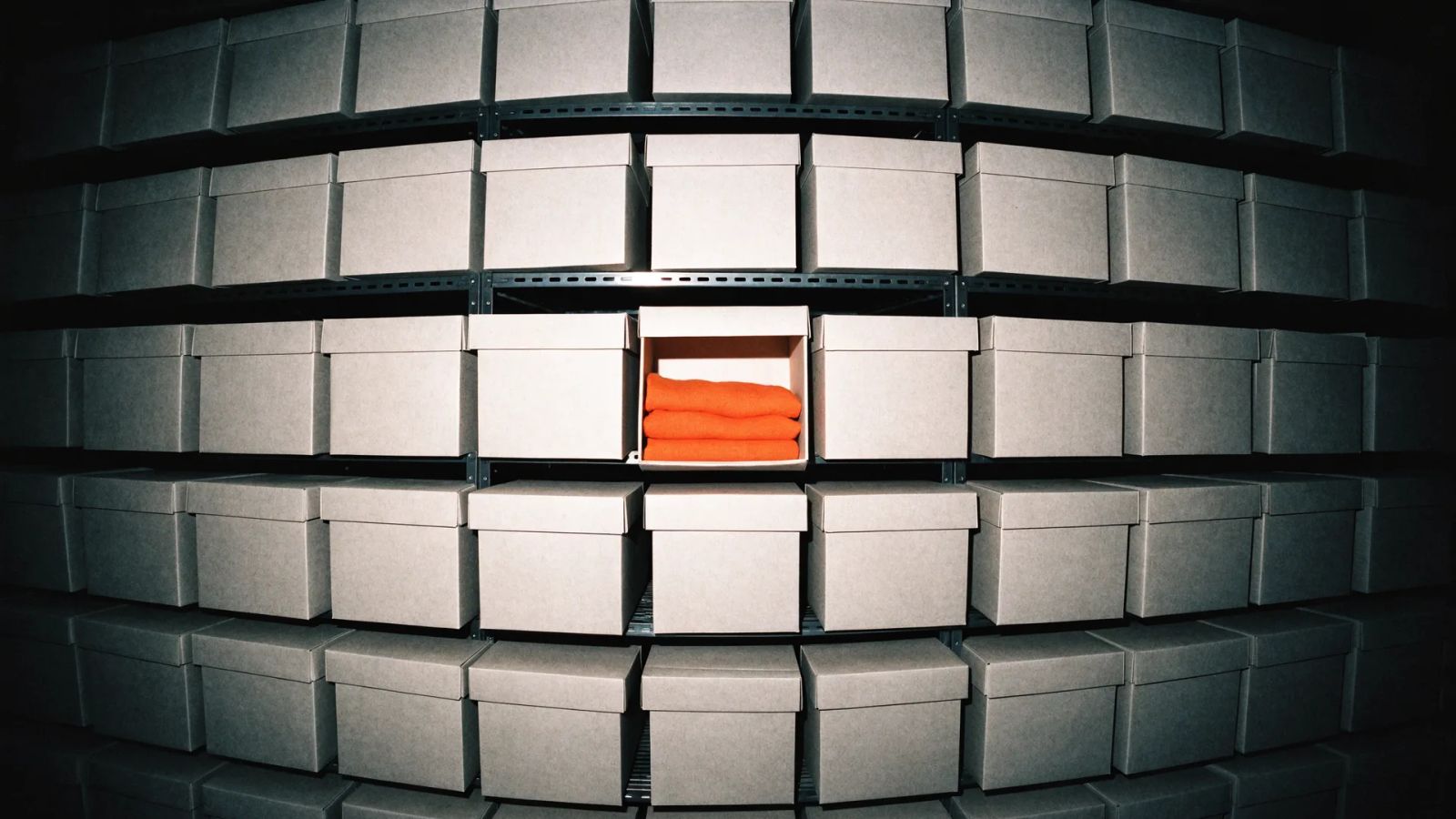
Type a query into most on-site search bars and you get somewhere between too much and nothing. Too much is a list that starts well and rots into filler. Nothing is a page that tells a shopper to leave, right after they wrote down exactly what they want.
We wanted to know how our own search holds up against the market leader on exactly that. A European fashion brand gave us the perfect test bed. One of its stores ran Algolia, live for years and tuned by hand. Another ran Depict's hybrid search. Same brand, nearly the same catalog of about 1,100 products. In August we put 36 real shopper queries to both and judged every results page product by product. Then we kept rerunning our side, to see how fast the gap would close.
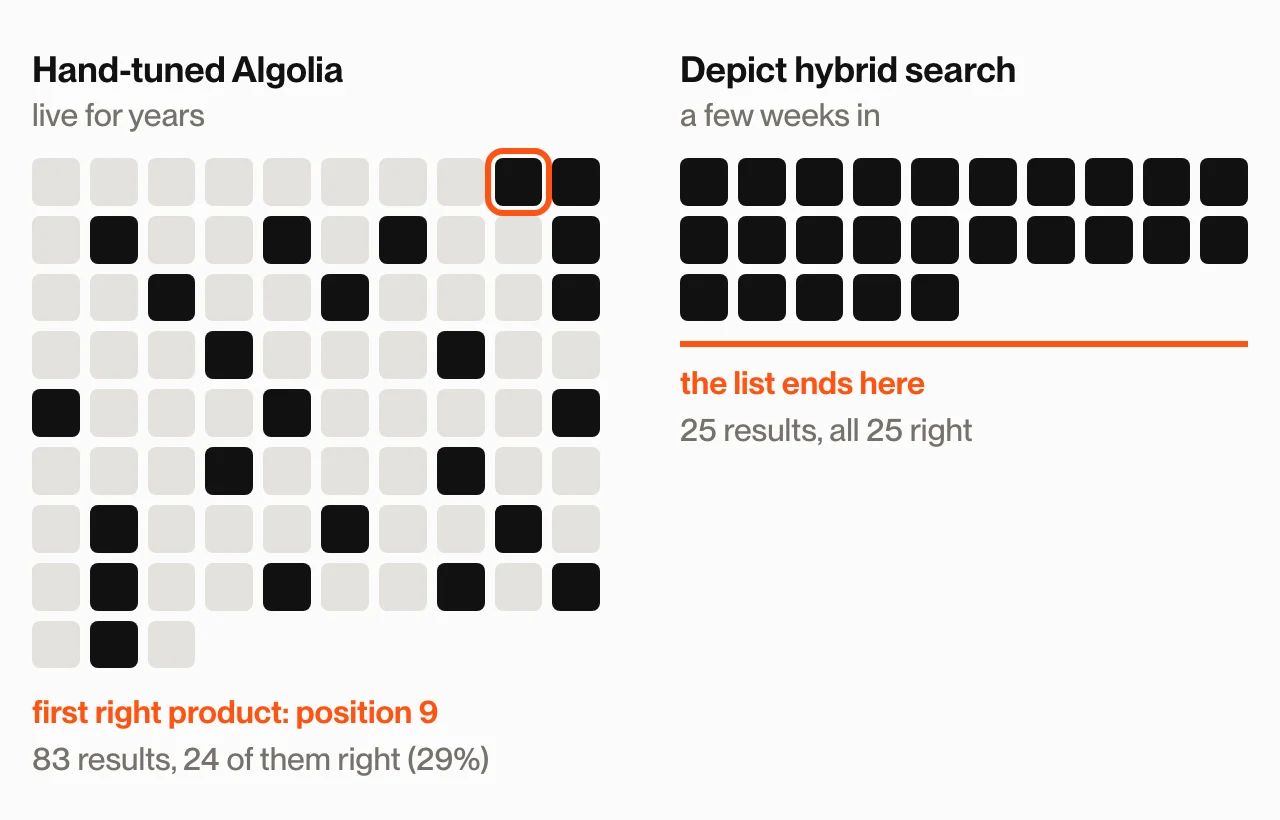
The same query on the same catalog, drawn to scale. One tile is one product, dark is the right product and pale is filler. Live storefront benchmark, August 2026.
What an average hides
An average tells you how an engine does overall. Three questions tell you what a shopper actually sees, and none of them need a dashboard.
Where does the first right product show up? Not the first result, the first right one. If a shopper asks for a specific garment in a specific color and the first true match sits at position 9, the search failed, whatever the average says.
How does the list end? When a shopper asks for something specific, the list should stop when the right answers run out. It should not trail off into products that only share a word with the question. Broad searches should still get long lists.
Does it ever dead-end? A zero-results page is the worst screen in e-commerce. The shopper told you what they wanted, in writing, and got told to leave. Even when the exact product is not in the catalog, the closest ones are.
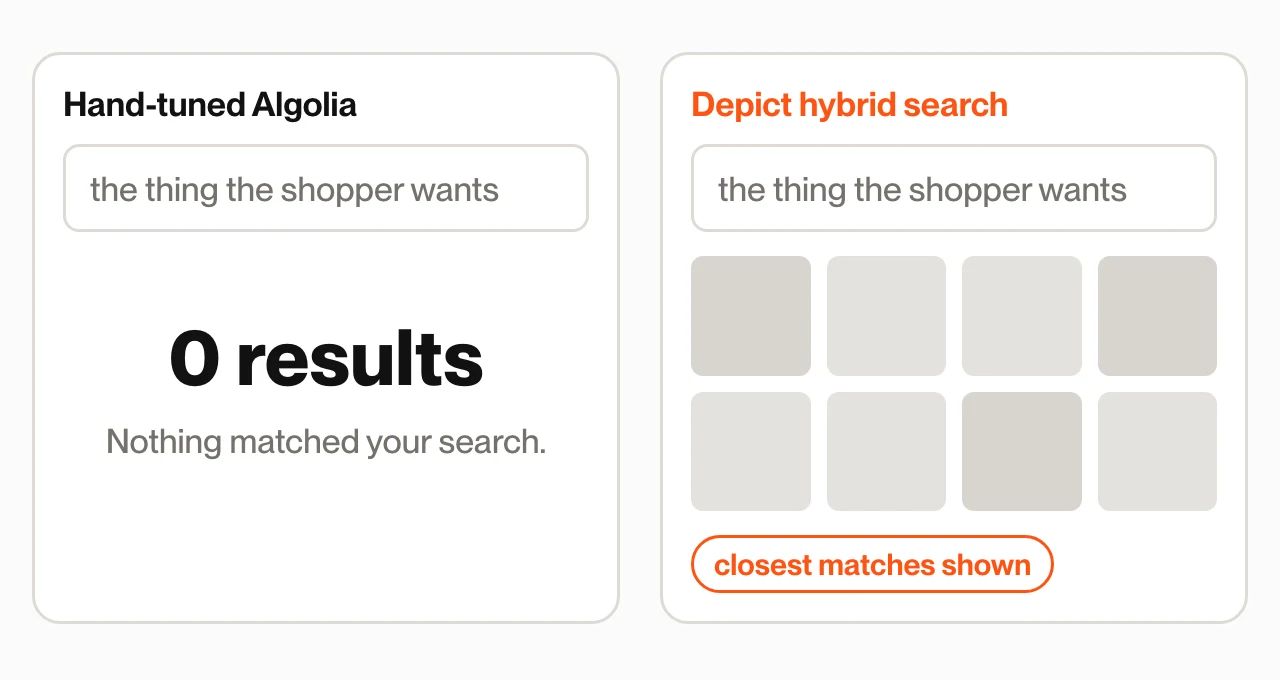
What each engine did when the exact product was not in the catalog. Live storefront benchmark, August 2026.
Where we started
The first run in August showed two different engines. Depict was already ahead wherever shoppers described what they wanted in their own words: an occasion, a color and a garment, a word the catalog spells differently, a typo. It never returned an empty page. The keyword engine returned two. On one American English query for a product the catalog names in British English, the keyword engine found 4 products and Depict found 49.
The tuned Algolia led on the simplest searches, single words like a product type, exactly what its years of rules were written for. And it led overall. That was the bar.
Ten weeks later
By October Depict had caught up. Overall, its results are now as good as the hand-tuned Algolia's. Algolia's numbers are as we measured them in August, because that setup is no longer running.
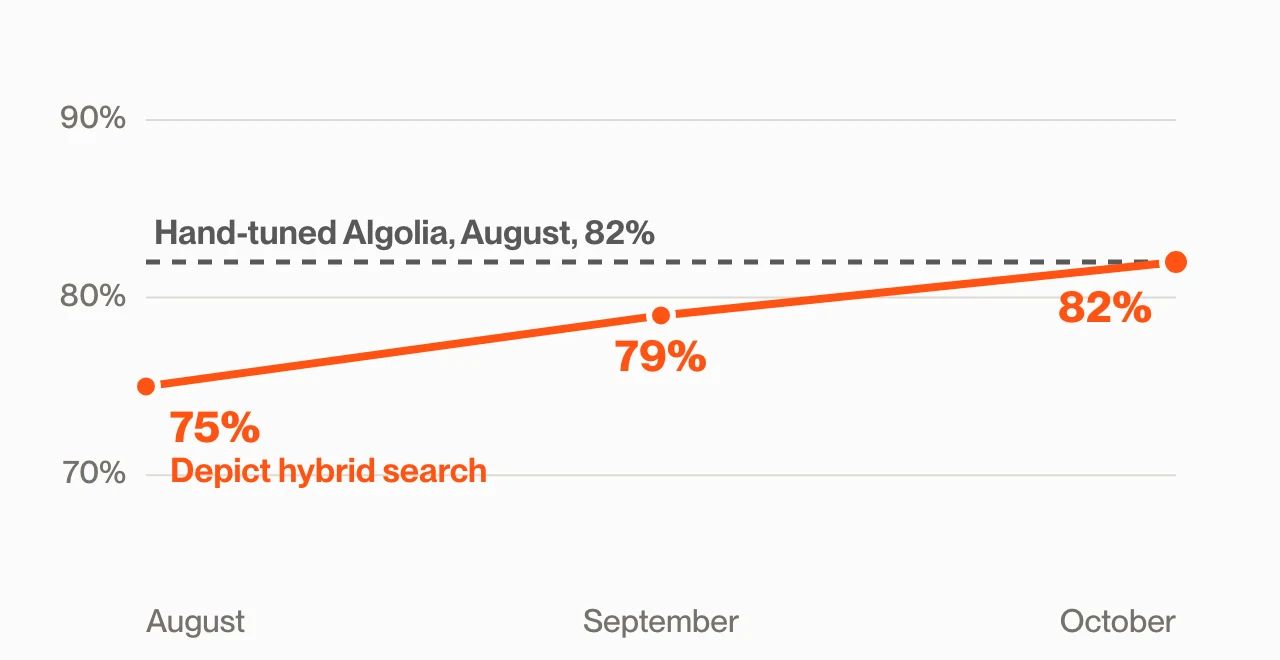
Share of each engine's top ten that was the right product. Live storefront benchmark, Algolia as measured in August 2026.
The biggest move came exactly where keyword search is strongest. On the simplest searches, the one-word queries every store gets most, Depict went from 64% right in its top ten to 100%. The tuned Algolia scored 94%. And on one color-and-garment search, the brand's own merchandisers had hand-picked five products for that theme. All five now show up in Depict's top ten.
The shape held too. Still zero empty pages across all 36 queries, and both engines found about the same number of right products. The difference is everything around them. Eight in every ten products Depict returned were what the shopper asked for. For the keyword engine it was six in ten, and the rest was filler.
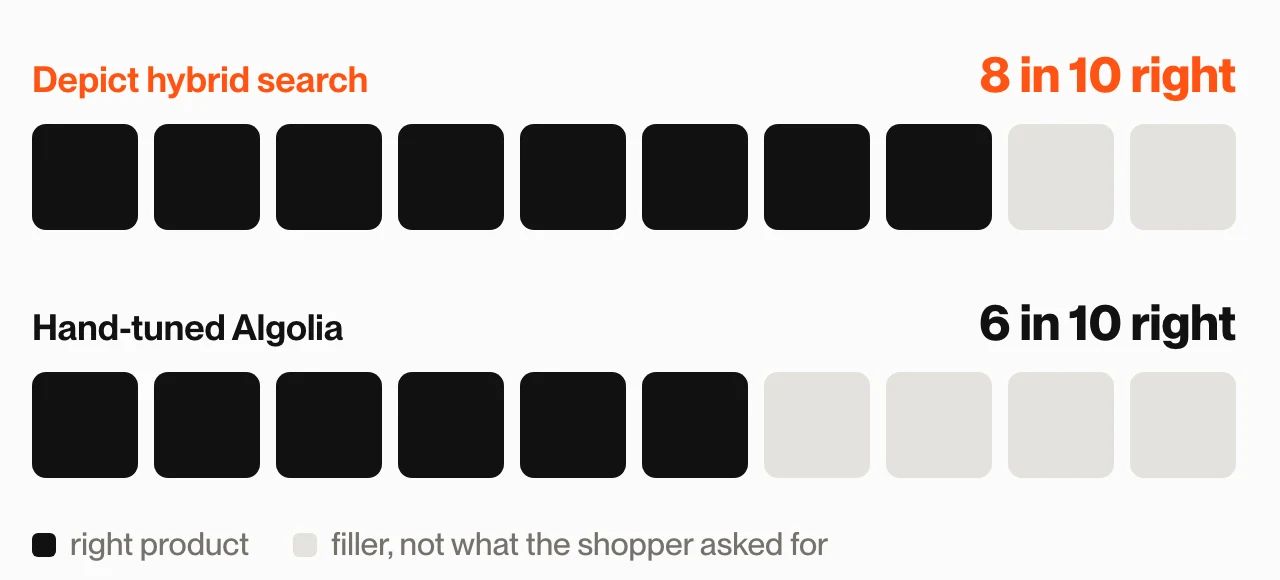
Out of every ten products each engine returned, how many were the right product. Depict October 2026, hand-tuned Algolia August 2026.
Nobody touched the store
Between the runs, nobody wrote a synonym, added a rule, or boosted a product on this store, though the tools to boost and bury are there whenever the team wants them. Your merchandising rules always win. A pin is a pin, a bury is a bury, and the automation never overrules them.
What changed was the engine. Every night it checks its own result quality and retunes underneath your rules. And our engineers ship improvements to the engine every week, to every store on it at once, never as a patch for one store. This store got those gains for free.
A vendor benchmarking itself deserves your suspicion, ours included. So we keep the receipts. The full query set and the raw result lists from every run are on the table in any demo.
The full-time job hiding in enterprise search
A keyword engine can only find products that share a word with the search. When the word is common, it returns too much. When the shopper's word is not the catalog's word, it returns too little. On one test its number one result for a dress query was a bottle of care fluid, because "dressing" contains "dress". Brands patch this with synonym dictionaries, rules, and boosts, written by a person, one gap at a time, forever. The Algolia setup we tested is that approach at its best, and it showed.
That era is ending, and not because the work stops mattering. It moves. When the engine improves on its own, the time goes where it shows, into the collections, the drops, and the stories only a person who knows the brand can build. Strong on day one, better every week, and the taste stays yours.
Try it on your catalog
The queries your shoppers type are better tests than any demo script. Bring the ten searches you most fear, run them on your own catalog with Depict, and look at the shape of what comes back. Where does the first right product sit, how does the list end, does it ever dead-end?
Depict Search runs today with brands on Shopify, Centra and headless storefronts, and pricing is public on our site. On Shopify it comes in one app with visual merchandising and recommendations, Depict: Search & Merchandising, one install from the App Store. Book a demo and we will run your queries with you, full benchmark on the table.
Updated October 2026. This post first ran in August with our first benchmark run. We have since rerun it and rewritten the story around where things stand today. The benchmark covers 36 shopper queries on the live storefronts of a European fashion brand. Both engines measured in August 2026, Depict measured again in September and October 2026. Every result judged product by product on the live pages, then checked again with a second, rules-based scoring method. Methodology and the full query set available on request.